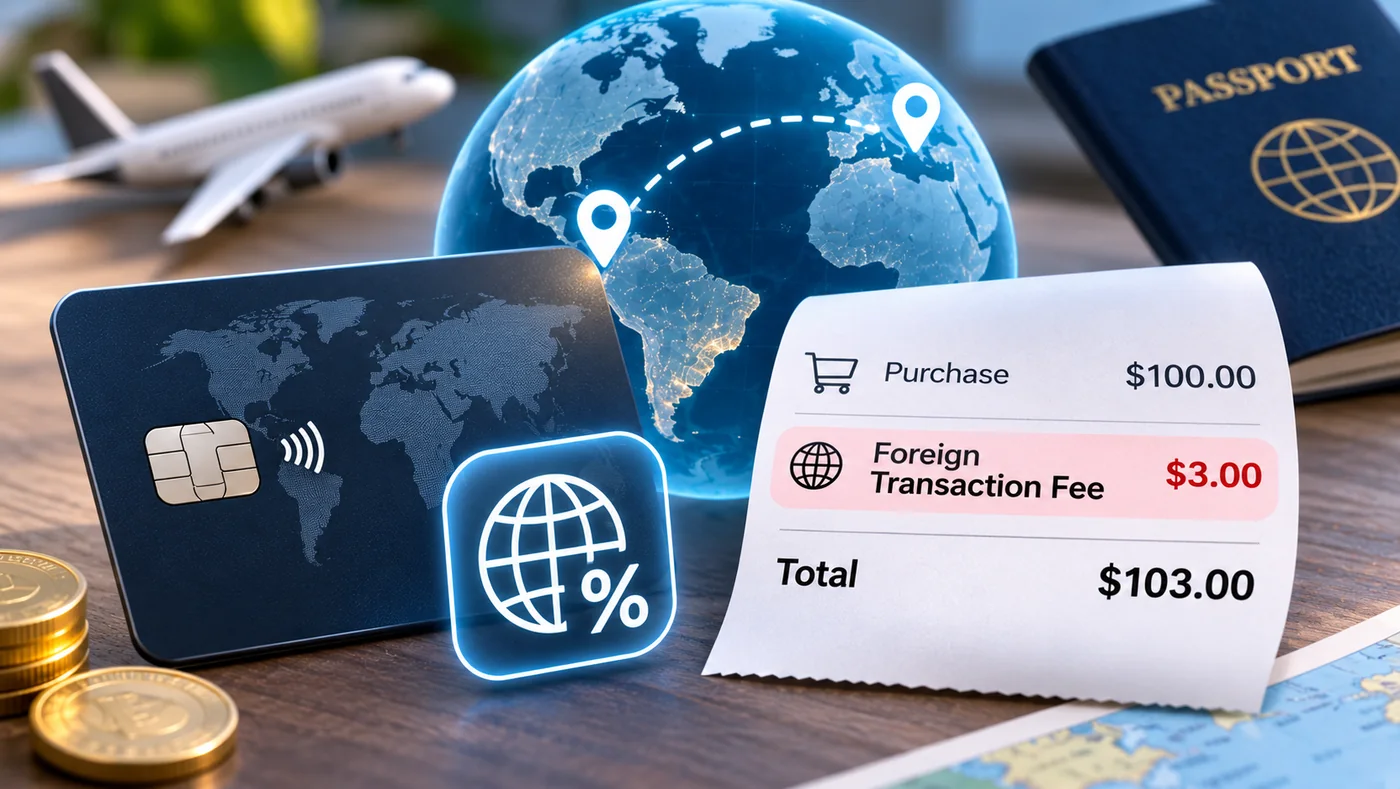
A foreign transaction fee is an issuer charge that may apply to eligible cross-border purchases. It is separate from merchant currency conversion, ATM fees and other borrowing costs.
A foreign payment may involve several costs
A card payment abroad can involve currency conversion and a foreign transaction fee, depending on the issuer and agreement. Some cards also apply fees to purchases made with foreign merchants online. A card advertised with no foreign transaction fee can still involve exchange-rate differences or other charges.
Compare the same purchase
Imagine a merchant charges 100 units of local currency. At a hypothetical conversion rate of $1.10 per unit, the base charge is $110. A 3% foreign transaction fee would raise the total to $113.30. If the terminal instead offers a home-currency total of $118, compare that with your card's own terms. This example does not represent any live exchange quote.
What is merchant currency conversion?
A merchant or ATM may offer to charge you in a currency familiar to you rather than the local currency. This offer can have its own rate and margin. Read the displayed amounts before accepting. If the terminal does not give a clear choice or the merchant changes the amount without permission, retain the receipt and contact the provider if needed.
ATMs have additional layers
A cash withdrawal can include an ATM operator fee, issuer fee and conversion charge. Using a credit card for cash may also trigger a different interest rate and timing than a purchase. Check the agreement before using a credit card at an ATM. Do not judge the cost of cash by purchase fees alone.
Prepare a simple travel checklist
Review the card's foreign transaction terms, daily limits, fraud alerts, contact numbers and acceptance. Carry a backup option separately. If you have multiple cards, compare their actual terms rather than assuming a premium card is cheaper. Track the posted settlement amount after travel so future comparisons reflect real costs.
What dynamic currency conversion means
A terminal or ATM may offer to charge your home currency rather than the local one. Visa’s consumer guidance explains that this service can include its own exchange rate and charges. Compare the offered amount with your card terms; paying in local currency often avoids the merchant conversion service but does not guarantee a cheaper total if your issuer has its own costs.
Online purchases can also be cross-border
You need not travel to trigger some issuers’ foreign transaction fees. A foreign merchant or foreign processing arrangement can matter even when a price appears in your home currency. Read the agreement’s definition rather than relying on the currency symbol. Review the posted statement and contact the issuer if a fee differs from your understanding.
Compare a card before a trip
Estimate purchases, cash withdrawals and any recurring overseas subscriptions. If projected eligible purchases total $1,500, a hypothetical 3% fee would cost $45, before other costs. Compare that against any annual fee for an alternative card and consider whether you already have a suitable account. Carrying debt to earn rewards or avoid a small travel fee can be much more expensive.
Read next
Sources & methodology
Editorial desk research, November 26, 2026. Official documentation and regulator guidance were consulted; product access, fees and terms can change. Examples are illustrative calculations, not live quotes. No hands-on product testing or independent professional certification is claimed. US regulatory sources apply to US rules only.