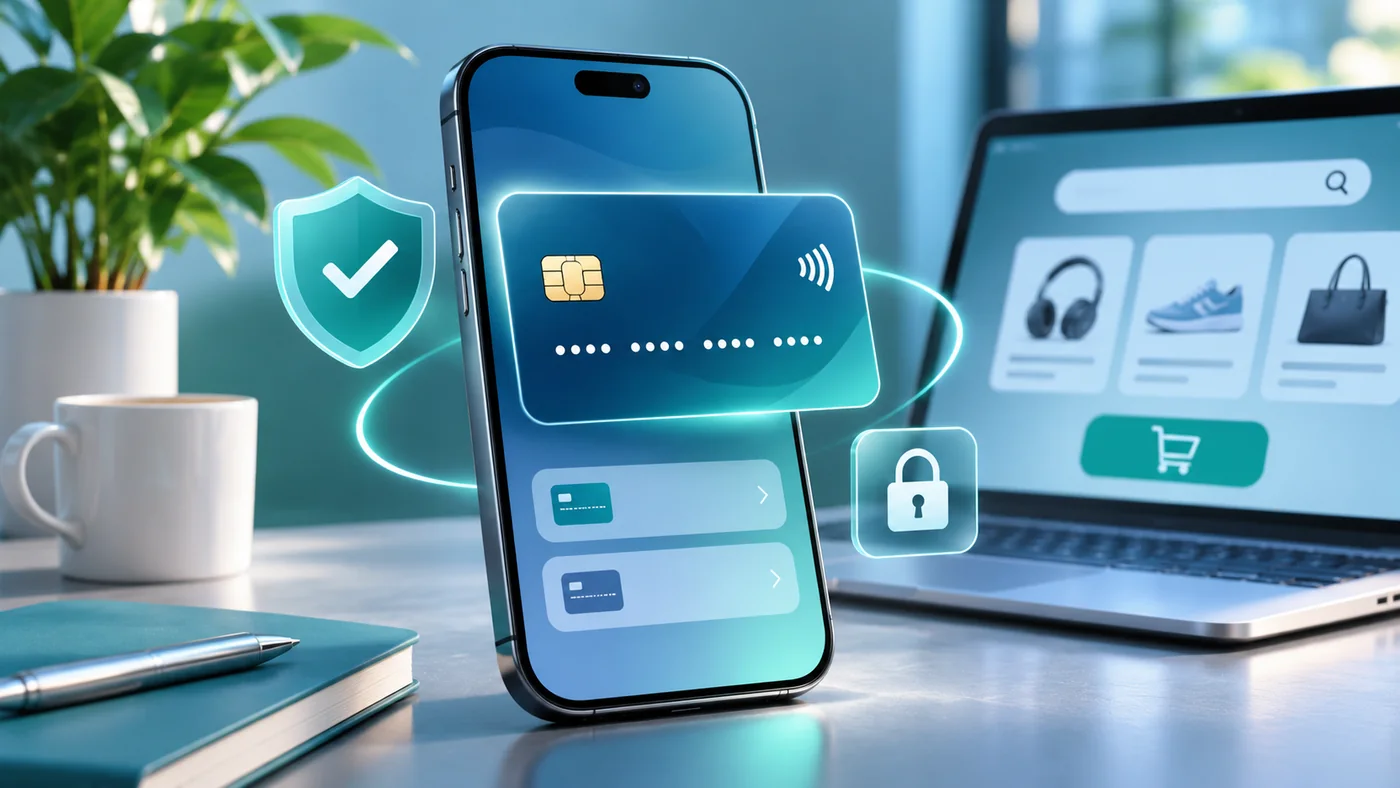
A virtual credit card is an alternative card number connected to an existing credit account. It can limit exposure of your main number, but does not eliminate fraud or change your obligation to repay authorized purchases.
A card number without a physical card
A virtual credit card number is an alternative credential connected to a credit account. Depending on the issuer, it may have its own expiration date, security code or spending controls. Virtual debit cards and prepaid cards are different: they generally draw from available funds rather than a credit line. Check the underlying account, not just the word virtual.
Why use a separate number?
An online merchant receives the virtual credential instead of the primary card number. Some issuers allow merchant-specific numbers or controls that make it easier to disable a credential if it is exposed. Capital One is one US example; features and eligibility are not identical across providers. A virtual number does not prevent an account takeover, a dishonest merchant or a purchase you authorize by mistake.
Subscriptions and recurring charges
A number that expires after one purchase may not work for recurring billing. For subscriptions, use a persistent credential if your issuer supports it, record the renewal date and cancel through the merchant when appropriate. Locking a number is not necessarily the same as cancelling the underlying contract. Hotels, car rentals or businesses that need to inspect a physical card may also reject virtual credentials.
Refunds and disputes
Save the receipt and the last four digits of the virtual number. If a refund is delayed, contact the merchant and the issuer through verified channels. Do not create a new payment to obtain a refund. US credit-card billing disputes have specific legal procedures; other jurisdictions may offer different protections and deadlines. Check the card agreement before assuming a charge can be reversed.
How to choose a virtual card
Compare the account fees, controls, foreign transaction costs, limits and replacement options. Determine whether it works in the merchant's country and whether the issuer lets you view transactions promptly. A no-fee virtual number attached to an expensive underlying account is not necessarily the cheapest choice. For routine online shopping, the best feature may be the ability to isolate a merchant without replacing your main card.
Virtual card numbers versus digital wallets
A virtual card number can usually be entered into an online checkout like other card credentials. A digital wallet may instead send a payment token when you tap a device or use a supported checkout. The technologies overlap, but the controls, merchant acceptance and ability to reuse a number can differ. Neither creates a separate credit limit unless the issuer explicitly offers one.
How to use one for an online purchase
Check if your existing account offers virtual numbers, then generate a credential through the official app or website. Confirm whether it is single-use, reusable or restricted to a merchant. Enter it only at a trusted checkout. Keep the receipt and check that the purchase appears in the underlying account. For a recurring bill, confirm that the number remains active through the next payment date.
When a virtual number is not enough
A fraudster who obtains account access might still be able to create new credentials. Enable account alerts and strong authentication. If you see an unknown transaction, report it to the issuer promptly rather than only deleting the virtual number. If a merchant requires the original card at pickup, confirm the policy before paying. Never share a one-time verification code with someone who contacts you unexpectedly.
Read next
Sources & methodology
Editorial desk research, November 26, 2026. Official documentation and regulator guidance were consulted; product access, fees and terms can change. Examples are illustrative calculations, not live quotes. No hands-on product testing or independent professional certification is claimed. US regulatory sources apply to US rules only.