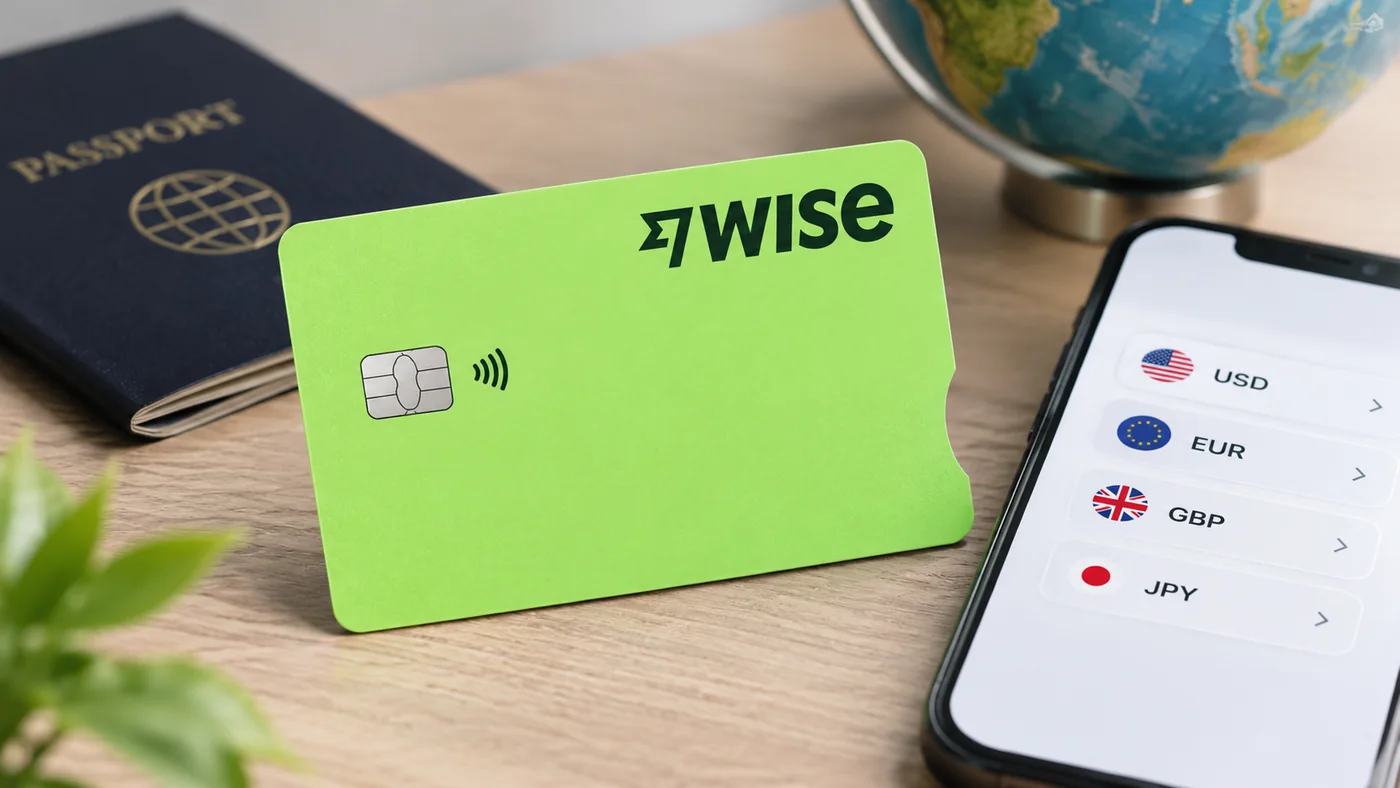
The Wise card is a debit-style multi-currency payment product available to eligible residents of supported markets. Its fees and features depend on the issuing country and account type.
What a multi-currency card offers
A multi-currency card connects spending to a payment account that can support more than one currency. The Wise card is offered in eligible markets and is generally a debit-style product, not a revolving credit line. The available account functions, issuer and card agreement depend on your residence and account type.
Check availability before planning a trip
Wise publishes a card availability page and country-specific documentation. Do not confuse the ability to send money to a country with the ability to order a card there. A digital card and a physical card may also have different requirements. Check your registered residence, verification status and the current ordering process in the official app.
Understand currency conversion
If you already hold the currency required by a merchant, the payment may use that balance according to the product rules. Otherwise, conversion may be needed. Compare the exchange quote and applicable fee before adding funds. An illustrative conversion of $200 with a 0.5% fee would cost $1 before any additional charges; this is not a Wise fee quotation.
Cash withdrawals and merchant conversion
ATMs may charge their own operator fee in addition to the card provider's fee. A terminal may also offer to convert a purchase into your home currency. Compare that offer with the card's own conversion terms; do not assume that a familiar currency means a better rate. The local currency amount can make the comparison easier.
Is it a replacement for a bank account?
Check how funds are held and what safeguarding or deposit protection applies to your specific entity and balance. Not every payment account is an insured bank deposit. Maintain a backup payment method for travel, review spending and withdrawal limits and test your account access before departing. A multi-currency card is a useful tool when its actual terms fit your needs.
Order a card versus use it abroad
A person may be able to send a transfer to a country where residents cannot order a Wise card. Wise maintains separate information on ordering eligibility and merchant or ATM acceptance. Verify residence-based availability before relying on the card and check restrictions for the country that issued it. Do not confuse supported currencies with eligibility.
What happens when the purchase currency is missing?
Wise describes using available currency balances and converting where necessary according to product rules. There are exceptions: for example, the help center explains special handling when Brazilian reais are involved for Brazil-issued cards. Check the current conversion quote and your exact account terms before making a large purchase. Merchant currency conversion can also introduce a separate rate.
How to budget for a trip
Make a list of expected card purchases, currency conversions and cash withdrawals. Compare the provider’s local fee page and any ATM operator fee. If a hypothetical ATM charges $4 on a $100 withdrawal, that fee alone is 4%; any card fee or conversion margin is additional. Check balance safeguarding and deposit protection for the specific legal entity, not a blanket assurance based on the Wise brand.
Read next
Sources & methodology
Editorial desk research, November 26, 2026. Official documentation and regulator guidance were consulted; product access, fees and terms can change. Examples are illustrative calculations, not live quotes. No hands-on product testing or independent professional certification is claimed. US regulatory sources apply to US rules only.