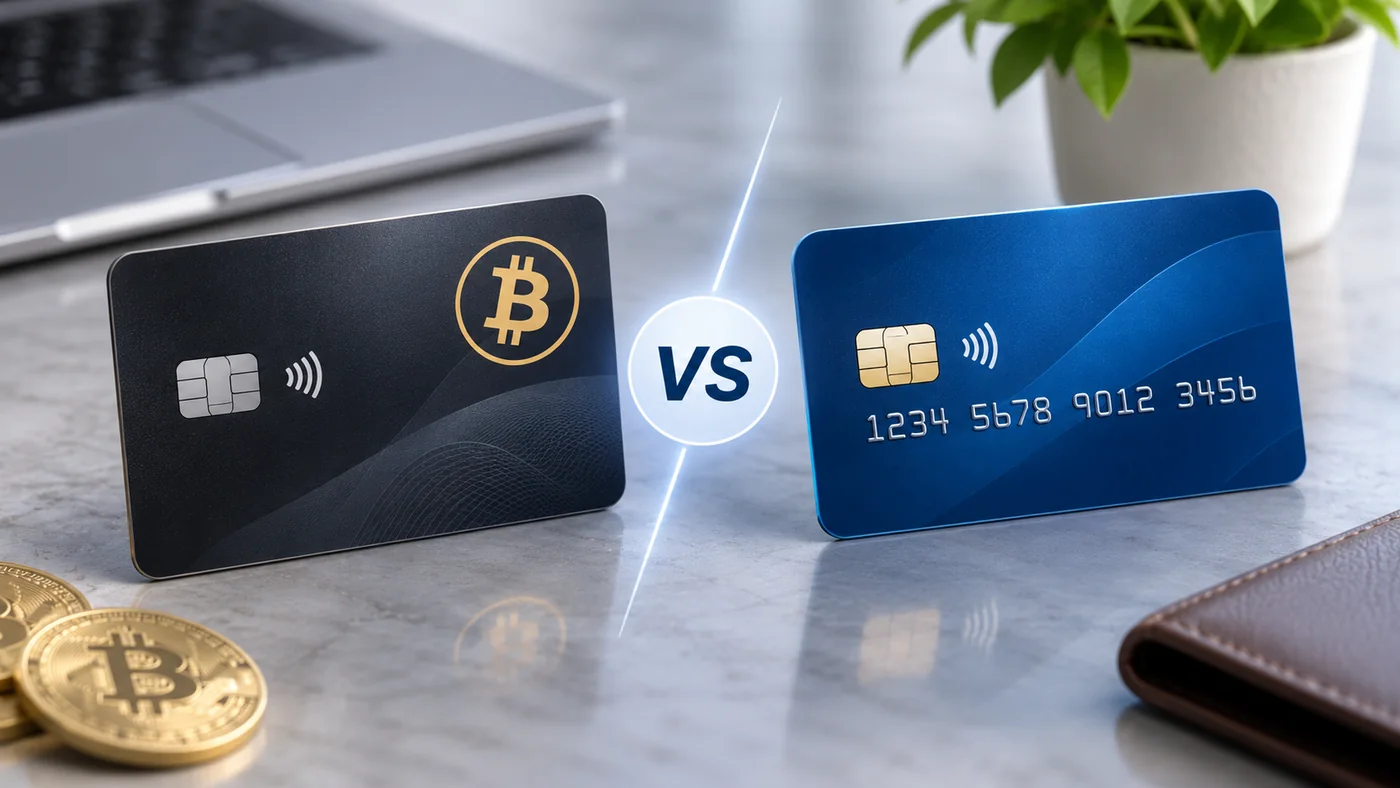
A crypto-linked card often spends existing assets or converted balances, while a conventional credit card generally draws on a credit line. Some crypto products offer credit, so always confirm the funding model.
Look beyond the card network
A crypto-linked card may convert digital assets to fund purchases or use a preloaded balance. A traditional credit card normally draws on a credit line that must be repaid. Some products offer cryptocurrency rewards without requiring crypto funding. Identify which model applies before comparing the cards.
Compare an ordinary purchase
For a hypothetical $100 purchase, a crypto-funded card with a 1.5% conversion charge consumes $101.50 in asset value. A conventional credit card with no relevant purchase fee and an applicable grace period could cost $100 if the required full balance is paid on time. If the balance is carried or another fee applies, the result changes. Neither example is a quote or a recommendation for a specific provider.
Rewards do not erase costs
A reward advertised as 2% may be capped, limited to specific merchants or dependent on holding a token. A reward paid in crypto can lose value. Compare the total cost after fees, the rules for redeeming rewards and the risk of holding assets solely to qualify. A reward is useful only when it offsets costs you would otherwise incur without encouraging unnecessary spending.
Recordkeeping and consumer protection
Spending crypto can involve a disposal for tax purposes. The IRS provides US guidance; the treatment abroad depends on local law. Identify the issuer, dispute channel and custody arrangement. Crypto transfers and card payments are not identical processes, so do not assume every purchase has a reversible funding transaction.
Choose based on how you already manage money
If you already have a legitimate reason to hold crypto and a card is available to you, compare conversion and custody risks with alternatives. If your main objective is predictable everyday spending, a conventional card or debit account may be simpler. Use the actual card agreement and your own repayment ability rather than rewards alone.
A purchase comparison using the same amount
For a $100 purchase, suppose a crypto-linked card converts assets with a hypothetical $2 total charge. A conventional credit card with no purchase fee might post $100; if you carry debt, interest can increase that cost. A reward worth $1 does not compensate for a $2 fee by itself. Compare what you actually pay, the asset value deducted, the timing and the repayment terms.
Taxes and transaction records
US IRS guidance treats digital asset dispositions, including spending assets, as relevant for tax reporting. A purchase may therefore require records of acquisition cost, disposal value and fees. Other countries apply different rules. A conventional card purchase does not by itself dispose of cryptocurrency. If you use a crypto card frequently, assess whether the extra recordkeeping is worth the benefit.
Disputes, refunds and service failure
A card payment may have network or issuer dispute procedures even when the funding source is crypto, but that does not mean every asset conversion can be reversed. Check who issues the card, which agreement governs, how the merchant refund is processed and what happens if the underlying exchange becomes unavailable. Keep a separate payment option for essential expenses.
Read next
Sources & methodology
Editorial desk research, November 26, 2026. Official documentation and regulator guidance were consulted; product access, fees and terms can change. Examples are illustrative calculations, not live quotes. No hands-on product testing or independent professional certification is claimed. US regulatory sources apply to US rules only.