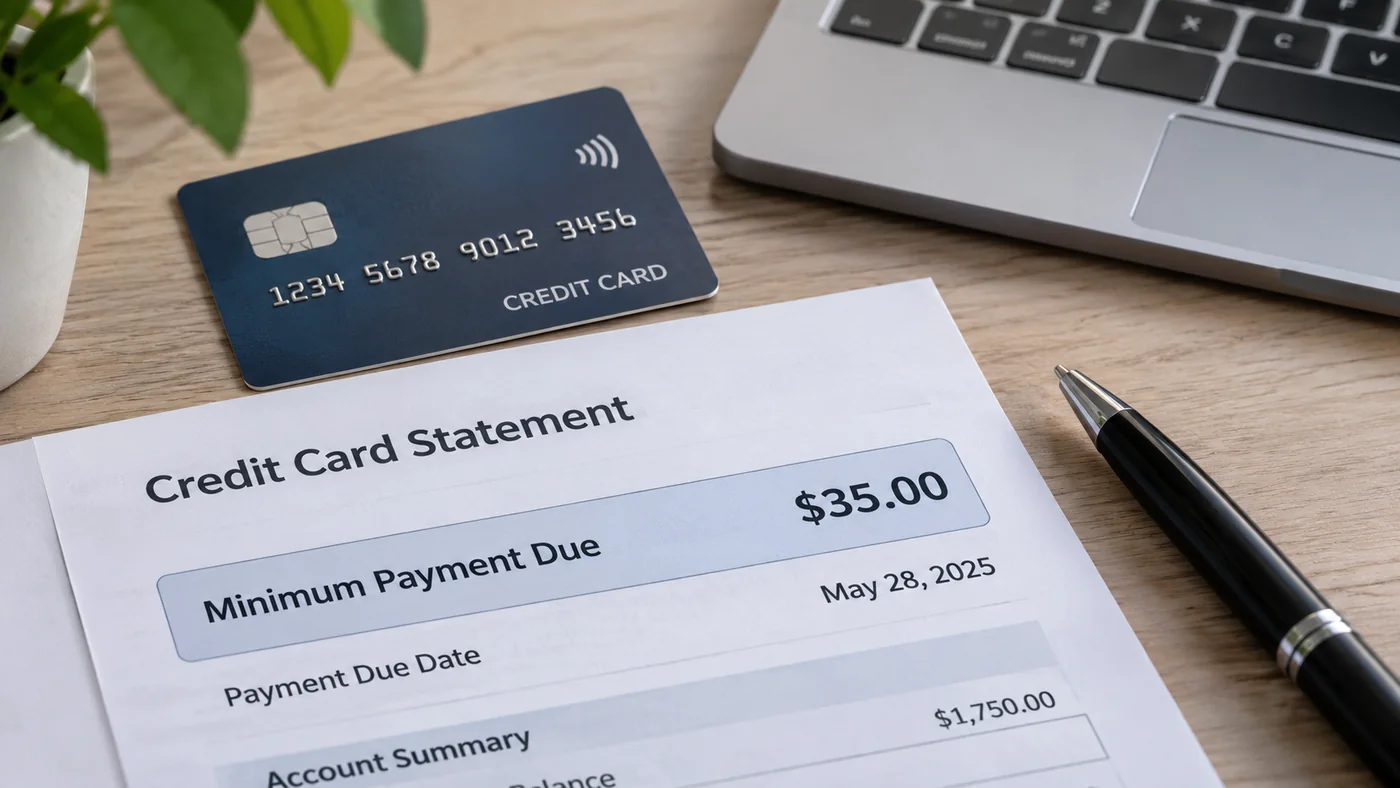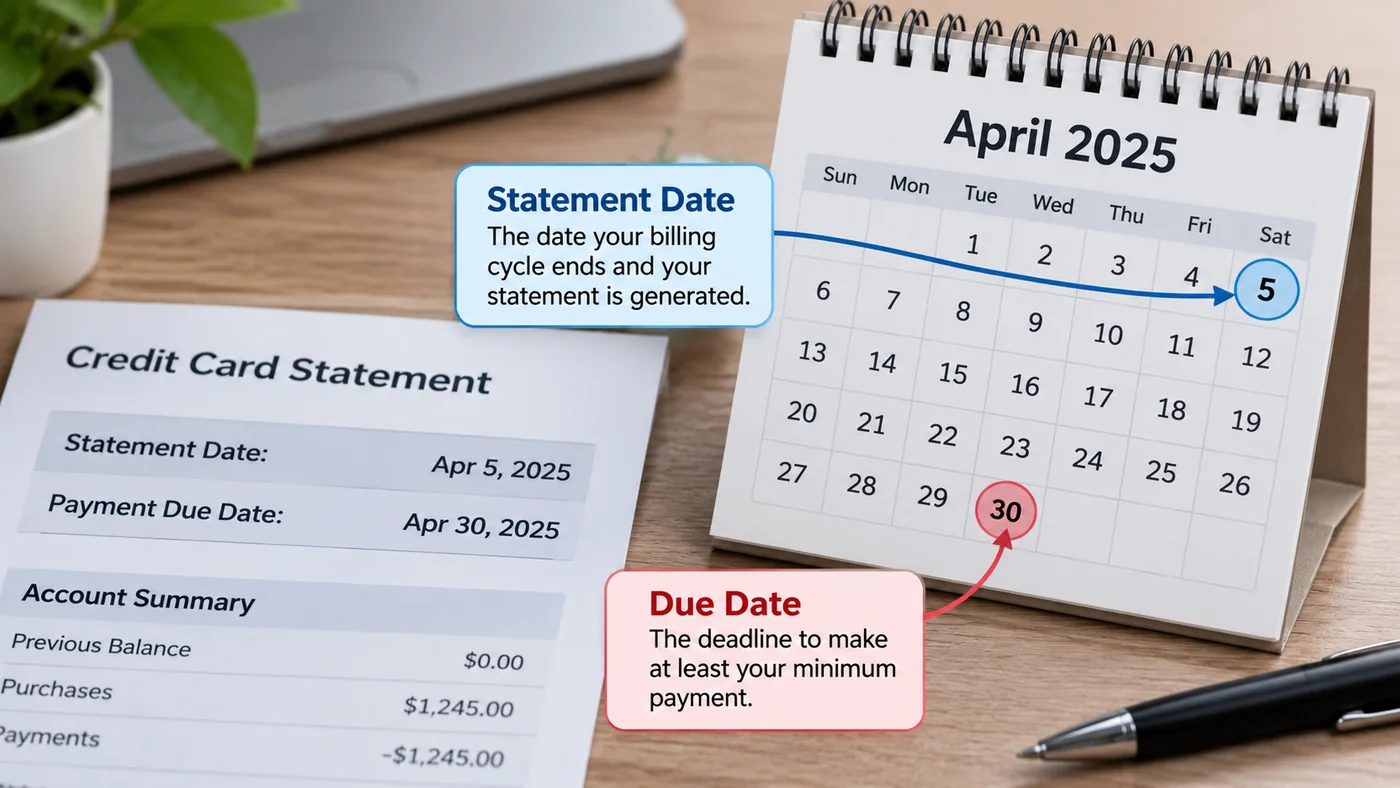
The closing date ends your billing cycle; the due date is the deadline for the required payment on that statement. They serve different purposes, and the statement balance is not always the same as your current balance.
Two dates, two jobs
The closing date marks the end of a billing period. The payment due date is the deadline for the required payment on that statement. Purchases after closing usually appear on a later statement, subject to posting timing. The exact interval and treatment depend on the account agreement and local rules.
Statement balance and current balance
Suppose a statement closes with $500 owed. After closing, you spend another $80. With no other activity, your current balance is $580 while the earlier statement still shows $500. If the account has a purchase grace period and you qualify for it, the amount required to preserve it may be the statement balance rather than every new transaction. Check the issuer's instructions, particularly if you have carried debt or used a cash advance.
What counts as on time?
A transfer initiated on the due date is not always credited immediately. Check payment cutoffs, weekends, holidays and the time zone. Use an approved payment method and keep a confirmation. Automatic payments are convenient but require sufficient funds; a failed bank debit can still create problems.
What about credit scores?
Reporting dates and scoring models differ. Some lenders report balances periodically, but the statement closing date is not a universal credit-reporting rule. Do not borrow or pay interest simply to build a score. Paying reliably and keeping borrowing manageable are more useful goals than attempting to game an unknown reporting schedule.
A monthly routine
Review the statement after closing, check unfamiliar charges, set a reminder ahead of the due date and verify that your payment posted. If you notice an error, follow the issuer's dispute process promptly. US consumers can consult the FTC and CFPB guidance linked below; readers elsewhere should check their own consumer protection authority.
An example billing calendar
Imagine a statement closes on May 3 with a $500 balance and the bill is due May 27. An $80 purchase that posts May 5 normally belongs to the next billing period. If you pay the $500 statement balance by May 27 and qualify for a purchase grace period, that may preserve the grace period even though the $80 remains on the account. These dates are illustrative; use the actual dates on your bill.
US payment rules and international differences
The CFPB explains that US issuers must have procedures to deliver bills at least 21 days before the due date and that payments received by the applicable deadline generally cannot be treated as late, subject to the rules. Your payment method, cutoff time and time zone still matter. In other countries the interval and legal requirements may differ; do not use a US example as a universal rule.
Which amount should you pay?
The minimum is the contractual amount due; the statement balance reflects the previous cycle; the current balance reflects later posted activity. If you previously carried debt, ask whether interest continues through the payment date. Set automatic payments only after checking which amount is selected, and maintain sufficient funds. Review the confirmation after each scheduled payment.
Read next
Sources & methodology
Editorial desk research, November 26, 2026. Official documentation and regulator guidance were consulted; product access, fees and terms can change. Examples are illustrative calculations, not live quotes. No hands-on product testing or independent professional certification is claimed. US regulatory sources apply to US rules only.