APR is an annualized borrowing rate. The amount of credit card interest you pay depends on your applicable rate, balances, billing days and whether a grace period applies.
What APR tells you
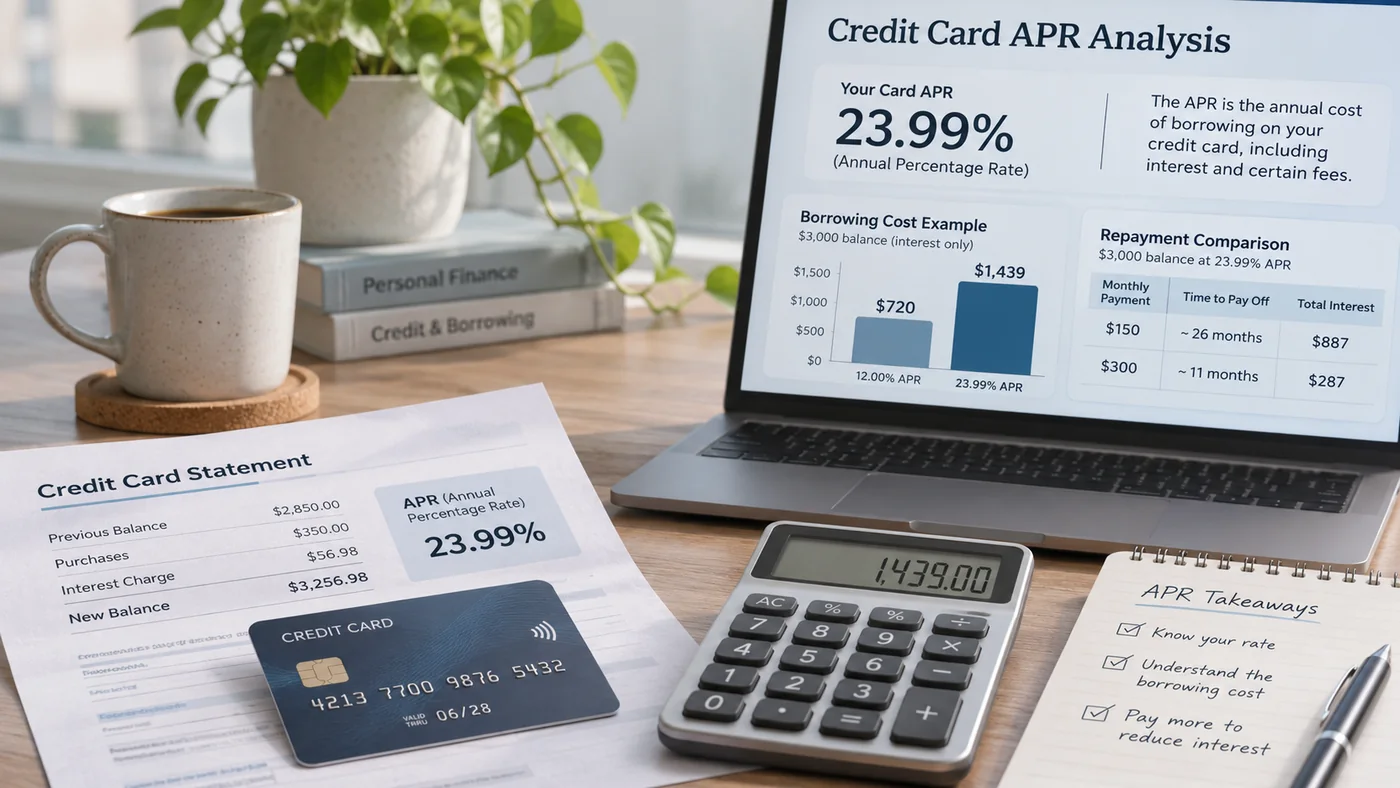
APR is an annualized rate used to describe borrowing costs. For a credit card, there may be separate rates for purchases, cash advances and transferred balances. An advertised low rate may be temporary or limited to eligible applicants. Fees are not necessarily represented by the purchase APR, so compare the agreement as a whole.
How a daily rate works
Many issuers calculate interest using daily balances. Suppose a hypothetical card has a 24% nominal annual purchase rate, a 365-day divisor and a constant $1,000 balance for 30 days. The simple estimate is $1,000 × 0.24 × 30 ÷ 365, or about $19.73. Actual interest may differ because payments, new purchases, compounding and the issuer's balance method change the result. This calculation is not a quotation from a lender.
Grace periods change the picture
For a card with an applicable purchase grace period, paying the required full balance by the due date may avoid purchase interest. Carrying a balance can alter that benefit. Cash advances often accrue interest differently. In the US, the CFPB explains these distinctions; elsewhere, the contract and local rules govern. Find the grace-period section rather than relying on a general promise of interest-free spending.
Promotional APR and deferred interest
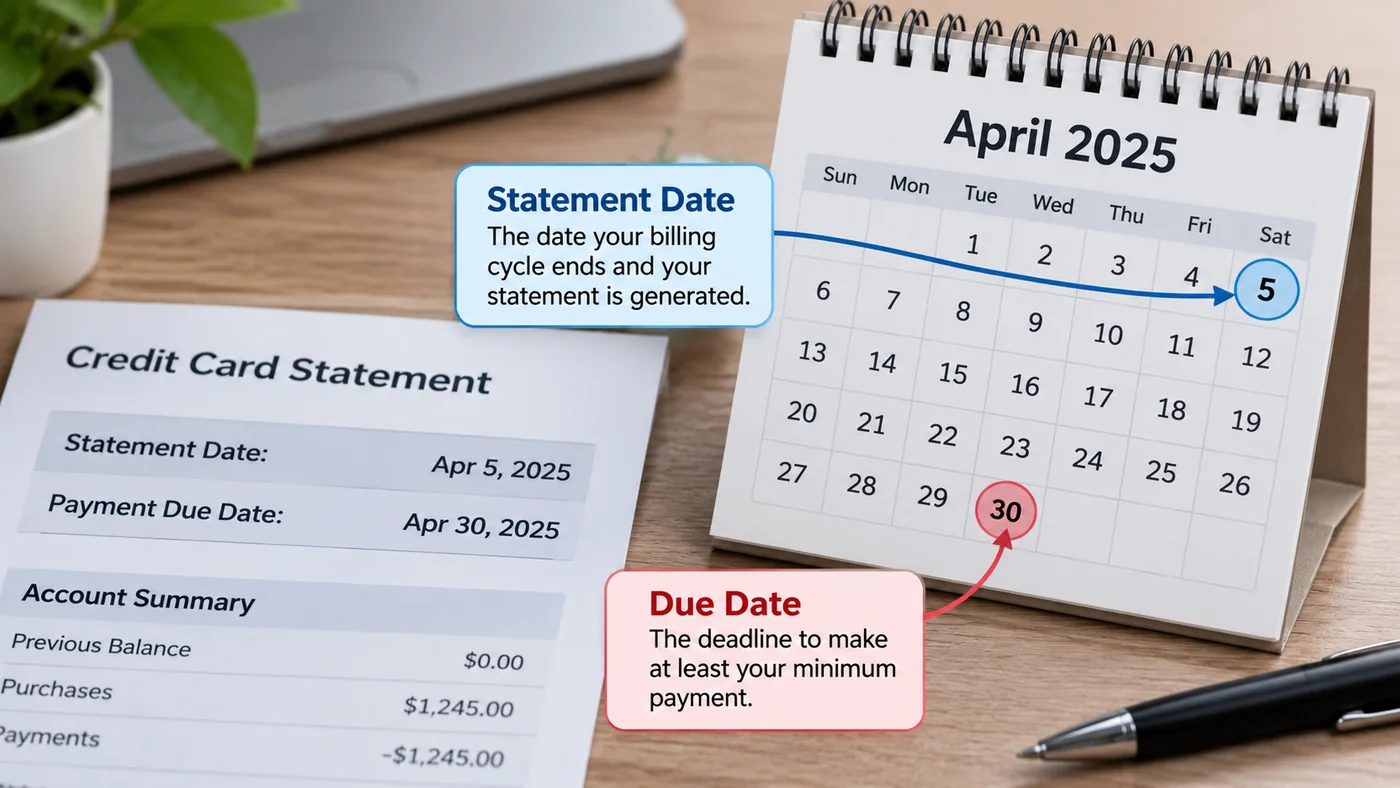
A genuine temporary zero-interest rate and an offer that defers interest can behave differently when the promotional period ends. Read what happens to the remaining balance, whether a transfer fee applies and which transactions are covered. Put the end date on a calendar and plan repayments against that date rather than assuming that minimum payments will clear the debt.
Compare total repayment, not just the rate
For existing debt, ask the issuer for the payoff amount and the interest calculation method. A lower-rate option with a large transfer fee can cost more if you plan to repay quickly. Avoid adding purchases to an account you are trying to clear, if practical. The useful comparison is the total amount repaid under realistic assumptions, including fees and timing.
Calculate an approximate daily interest charge
Divide the APR expressed as a decimal by the divisor in the card agreement. At 24% and 365 days, the daily rate is approximately 0.06575%. A constant $1,000 balance produces about $0.66 per day, or $19.73 in 30 days under the simple-interest assumptions above. A $500 balance for the first 15 days and $1,000 for the next 15 would instead yield about $14.79. Do not round the daily rate before the final calculation.
Why the purchase APR is not the only rate
A cash advance, transferred balance or promotional purchase may be tracked in a separate balance category. In the US, the CFPB describes separate categories and the general allocation of amounts above the minimum toward higher-rate balances, subject to exceptions. Elsewhere, read the issuer agreement and applicable rules. Look at the actual statement rather than assuming every charge accrues interest at the advertised purchase rate.
How to reduce interest without chasing offers
If you qualify for a purchase grace period, paying the required full statement balance by the deadline may prevent new purchase interest. If carrying debt, compare extra repayments with the cost of a transfer, including any fee and the rate after the promotion ends. A $1,000 transfer with a hypothetical 3% upfront fee costs $30 even before any later interest. Ask the issuer whether residual interest may appear on the next statement after payoff.
Read next
Sources & methodology
Editorial desk research, November 26, 2026. Official documentation and regulator guidance were consulted; product access, fees and terms can change. Examples are illustrative calculations, not live quotes. No hands-on product testing or independent professional certification is claimed. US regulatory sources apply to US rules only.